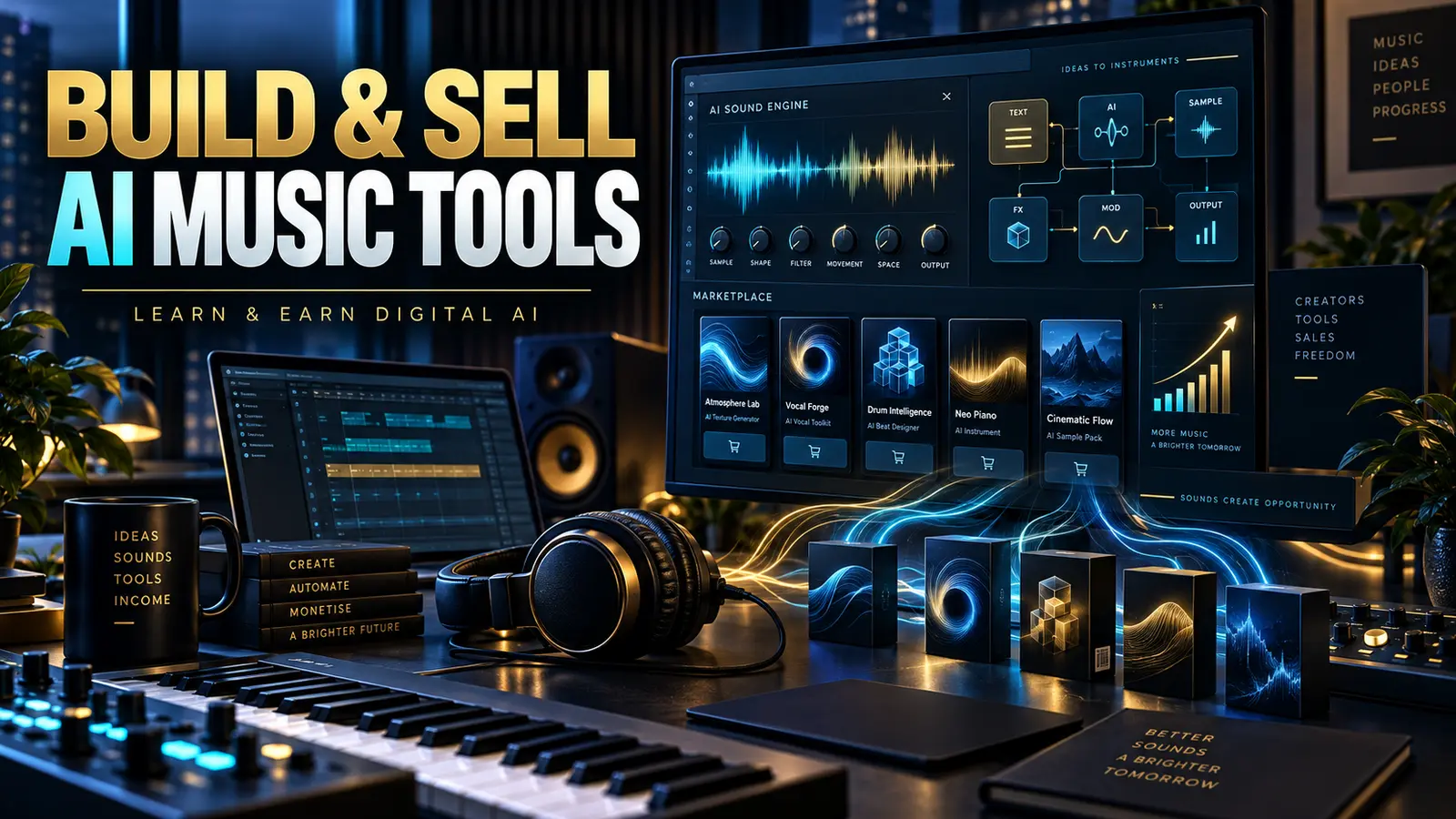
Lunacy Audio has launched Nova, a cloud-based home for virtual instruments that work in a browser and inside major music-production software. Five instruments are free, five are paid and a launch bundle is currently listed at $99.
The bigger creator opportunity is not fully open yet. Lunacy says a forthcoming Nova builder will let people create, remix, share and sell instruments and effects without conventional programming. That could turn specialist sound design into a more accessible digital-product business.
There is a crucial line between the confirmed product and the future promise. Nova's player, instruments and marketplace are available now. The public builder, open selling process, creator fees and commercial terms have not yet been published. Treat this as an early research opportunity—not a ready-made income stream.
What Lunacy launched
Confirmed fact: Lunacy introduced Nova on 17 September 2026. Its instruments live in the cloud, can be tried in a web browser and can run inside a digital audio workstation through the free Nova host plug-in.
The launch library contains ten instruments. Lunacy lists Woodland Piano, Chiptuner, Silhouettes, Good Vibes and Zephyr Strings as free. Five premium instruments—Swarm, Drift Cassette, Gleam, Growl and Anima—are also available.
The official product page lists the five-instrument launch bundle at a promotional $99, reduced from $149. It says the bundle includes more than 200 presets, 50 multi-sampled instruments and a selection of audio algorithms. Prices and promotions can change, so check the current page before buying.
- Ten instruments at launch: five free and five premium
- Browser previews plus a free host plug-in for music software
- AU, VST3 and AAX support depending on operating system
- macOS 11 or Windows 10 minimum listed
- Stable internet connection required for downloading and activation
The important detail: the AI builder is not public yet
Confirmed fact: Lunacy's current site labels the build, remix, share and sell system as 'coming soon'. It says creators will be able to imagine a plug-in, build it in Nova, remix other tools and sell work through the marketplace.
The Verge reports that Nova tools are designed to be assembled with pre-made effects blocks and AI prompts instead of traditional code. MusicRadar says the builder is in early access with a small group of developers and that Lunacy has not announced a firm public release date.
That distinction matters. A creator can download Nova and use or buy instruments today. Most people cannot yet open the promised builder and start selling. Lunacy has also not publicly detailed marketplace commission, payout rules, review standards, ownership terms or support obligations.
Why this matters to creators and small businesses
Traditional audio plug-ins often require specialist programming, interface design, testing across several music apps and ongoing technical support. A prompt-and-block builder could remove some of that engineering barrier and let more sound designers package their knowledge as software.
Our analysis: the real shift is from using AI to generate finished music towards using AI to build a reusable tool. A finished track competes for attention once. A useful instrument, effect or workflow can solve the same narrow problem for many customers.
That does not make the business easy. The strongest products will still need an identifiable sound, a simple interface, reliable performance, clear rights and useful demonstrations. Easier creation normally increases competition, so knowing a specific customer becomes more important—not less.
Five practical product ideas to research
Start with a small creative problem that existing musicians repeatedly describe. Do not begin with 'an AI synth for everyone'. Pick one audience, one job and one recognisable result.
A video creator may want a one-control instrument for tense background beds. A podcast editor may value a simple voice-transition effect. A game developer may need consistent retro interface sounds. A meditation business might want soft evolving textures that remain out of the way of speech.
These are research prompts, not proof of demand. Speak to potential users, inspect competing plug-ins and confirm that your source sounds and training material can be used commercially before building anything.
- Short tension beds for video creators
- Branded transitions for podcasters
- Retro interface sounds for indie games
- Gentle background textures for meditation content
- A niche effect built around one genre-specific problem
The opportunity: prepare before the builder opens
Our analysis: the sensible early-mover play is preparation, not pre-selling. Download the free Nova host, test how the current instruments behave, study the interface and write a one-page brief for a narrow tool. Join Lunacy's official update list if the platform fits your audience.
A creator with sound-design skills could prepare original samples, presets, demonstration tracks and a short tutorial. A freelancer could offer product positioning, interface copy or launch content to audio developers. A niche educator could teach customers how to use a finished tool once its licence and marketplace rules are clear.
Do not advertise a Nova product, take payment or promise a release date while the public builder and seller terms remain unavailable. The advantage is being ready to evaluate the opportunity quickly when real access and commercial conditions arrive.
Risks and limitations
The largest unknown is the business model. Marketplace commission, payout timing, refunds, customer data access, exclusivity, content moderation and ownership rules can determine whether a product is worth supporting. Wait for written terms rather than relying on launch coverage.
Audio rights are another serious risk. A creator needs permission for every sample, recording, preset ingredient and branded reference used in a commercial tool. AI assistance does not erase copyright, performer rights, music licences or the need to disclose third-party material accurately.
Cloud dependence creates platform risk. Lunacy says a stable internet connection is required for downloading and activation. Customers will also expect compatibility, updates and support across different computers and music applications. A small plug-in can become a continuing service obligation rather than passive income.
One practical action: write a one-page plug-in brief
Choose one audience you already understand and write the exact sentence: 'This tool helps [specific user] create [specific result] without [specific frustration].' Then list the three controls the user genuinely needs and remove everything else.
Find five people in that audience. Ask what they use now, what slows them down, what they have already paid for and what would make them distrust a new tool. Do not lead with Nova or AI; validate the problem before the technology.
Finally, collect only original or properly licensed sounds, sketch a demonstration and set a maximum support burden you could handle. When Nova publishes public builder access and seller terms, compare those facts with your brief before spending money or promising a launch.
- Name one narrow customer and one repeated problem
- Limit the first concept to three essential controls
- Interview five potential users about current behaviour
- Prepare original or commercially licensed source material
- Wait for public access, fees and seller terms before launching
COMMON BEGINNER QUESTIONS
What is Lunacy Nova?
Nova is a cloud-based platform for virtual instruments that can be played in a browser or loaded into music-production software through its free host plug-in.
Is Nova free?
Nova currently lists five free instruments and five premium instruments. Its launch bundle is listed at a promotional $99, but prices can change.
Can anyone build and sell Nova plug-ins now?
Not yet. Lunacy labels the builder and open create, remix, share and sell features as coming soon. Public access, marketplace fees and seller terms have not been announced.
Will Nova require coding?
Lunacy's plan is to let creators build with a visual system, pre-made blocks and AI prompts rather than traditional programming. The public builder is still forthcoming.
What should creators do before the Nova builder launches?
Research one narrow customer problem, test the free host and instruments, prepare original or licensed audio material and wait for the published commercial terms before taking payment.
Loading comments...